Ali Abdaal's Team Launched an $80K Course in Two Weeks. Here's the Method.
Angus Parker has been Ali Abdaal's General Manager for years. He was in the room when Part-Time YouTuber Academy went from a throwaway tweet to $80,000 in the first hour. Here's the launch philosophy that made it happen.
The Two-Week Launch Method
Most creator products fail because they take too long to build. You overthink. You polish. You wait until it's "ready." Meanwhile, you're building in a vacuum with zero feedback.
Angus calls this the correlation they've noticed across all their products: the faster they launched, the more successful the product became. The ones that dragged on (like physical products that took 18-24 months) consistently underperformed.
The core insight: Launching early isn't reckless. It's strategic. You're not shipping garbage; you're shipping a minimum version that generates real data.
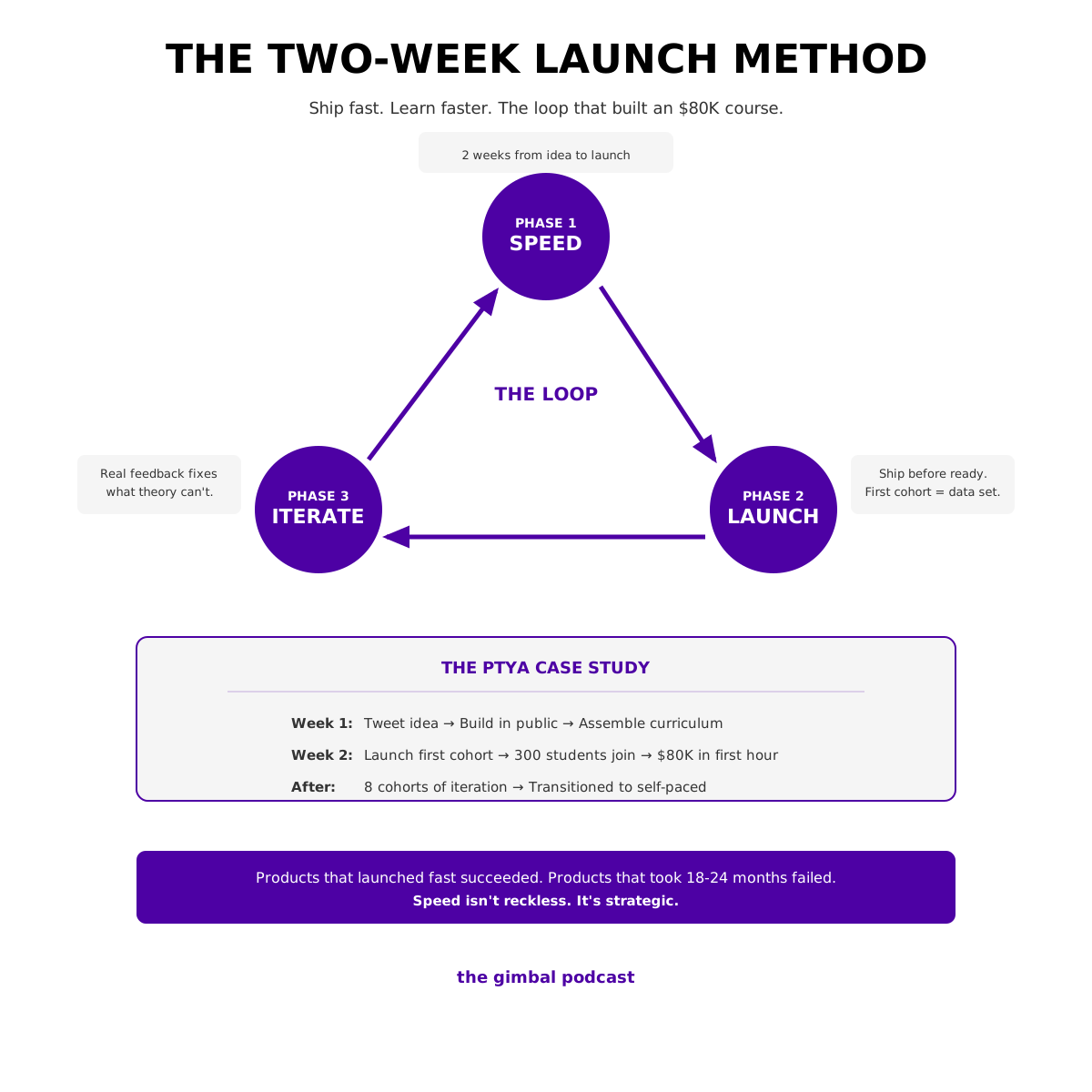
Phase 1: Speed
Move fast. PTYA went from idea to launch in roughly two weeks. Ali and Angus assembled curriculum in about a week of nonstop calls, brought in a consultant for cohort structure, and built in public on Twitter to get feedback on everything from the name to the curriculum.
Phase 2: Launch
Ship before you're ready. The first PTYA cohort was explicitly designed as a "data set" of 200 people to improve the course. 300 joined. At conservative pricing, they hit $80K in the first hour.
Phase 3: Iterate
Use real feedback to improve. They ran 8 cohorts, iterating each time, before transitioning to self-paced. The product that exists today is unrecognizable from V1.
See the Two-Week Launch diagram below. The loop never stops. Every launch becomes data for the next version.
How to Use This
- Set a two-week deadline. Whatever you're building, force yourself to ship something in two weeks. Not perfect. Functional. If it takes longer than that, you're overthinking.
- Define your "data set" goal. Your first launch isn't about revenue. It's about learning. How many people do you need to get meaningful feedback? That's your target.
- Build in public. Ali and Angus used Twitter to get real-time feedback on naming, pricing, and curriculum. Let your audience shape the product before it launches.
- Price conservatively for V1. Lower the barrier. You're not trying to maximize revenue on launch one. You're trying to maximize learnings.
- Commit to the iteration. The first version is never the final version. Plan for multiple rounds of improvement before you even ship V1.
What Else Angus Revealed
- The "desert zone" of team size that almost broke their business (and how they escaped it)
- Why they use Loom videos to filter job applicants (and the 2-minute rule that cuts candidates fast)
- The hiring philosophy that turns employees into entrepreneurs (on purpose)
- How VoicePal is betting on distribution + trust in an AI-saturated world
Watch the Full Episode
Connect with Angus
- LinkedIn: Angus Parker
- Instagram: @apmparker
- Ali Abdaal's Channel: @aliabdaal